
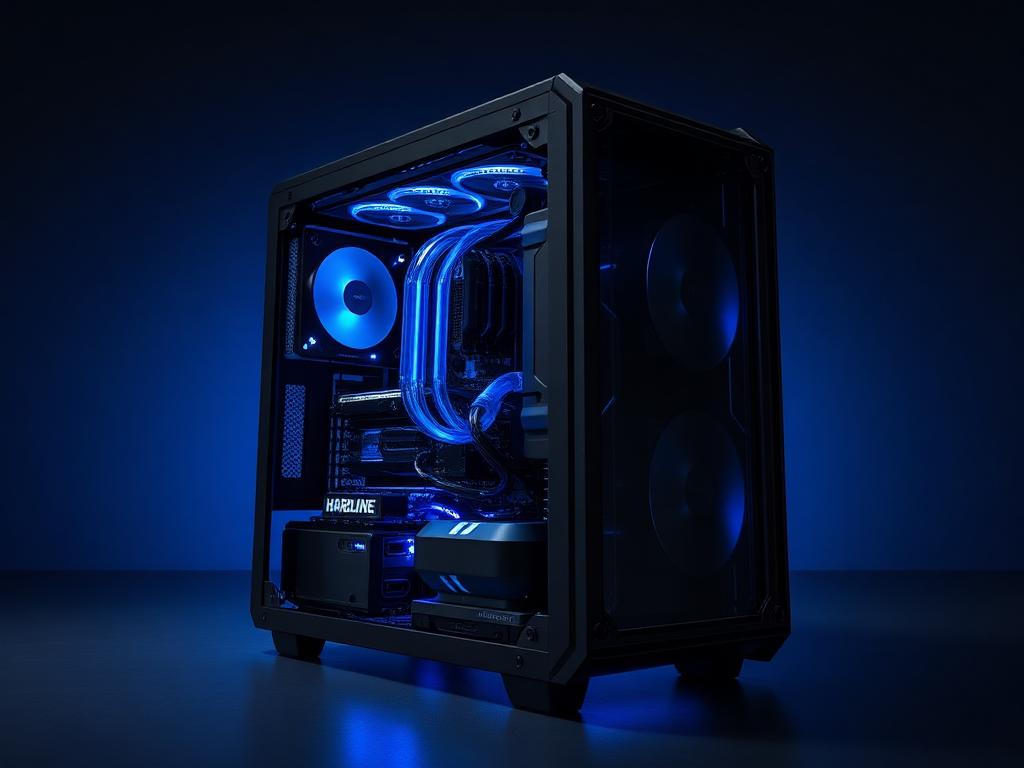
INVESTIGATION DOSSIER
HIGH-END PCS
Flagship money. Prove it.
At 2,500 credits+, the question is not whether the parts are fast — it is whether the configuration is worthy of the silicon. We investigate power delivery, cooling and balance at flagship level.
INVESTIGATE A HIGH-END PCWHAT WE INVESTIGATE
- Flagship GPU power transients
- 1000W+ PSU quality and rail design
- CPU pairing at high refresh
- Memory tuning headroom
- Custom loop / AIO capacity
- Case airflow for 500W+ heat loads
- Gen5 storage real-world gains
- Diminishing-returns analysis
COMMON MISTAKES WE CATCH
- An 850W PSU under a 575W GPU's transient spikes
- Showcase glass with no intake plan for a 500W heat load
- 400 credits of RGB on a motherboard with mid-tier VRMs
- Gen5 SSD money that should have gone to the GPU
RECOMMENDED CONFIGURATIONS
HIGH-END PCS — REFERENCE BUILDS
High-End 1440p/4K
Ryzen 7 9800X3D · RTX 5080 · 32 GB DDR5
2,300–2,700 credits
Flagship
Ryzen 7 9800X3D · RTX 5090 · 64 GB DDR5
3,400–3,900 credits
Halo Build
Threadripper · RTX 5090 · 128 GB · custom loop
6,000 credits+
PRIORITY ORDER
- 01 PSU headroom is non-negotiable
- 02 Cooling matched to sustained load
- 03 X3D-class CPU for high-refresh gaming
- 04 Airflow-engineered case
- 05 Spend on silicon before lighting
COMPONENTS UNDER REVIEW
Every high-end pc investigation inspects these components against the criteria above — then issues a verdict.
ANSWERS ON RECORD
FREQUENTLY ASKED QUESTIONS
For 4K high-refresh gaming, heavy rendering or AI work — yes. The value curve bends hard above 2,500 credits, so we quantify exactly what each extra 100 credits buys.
Recommended, yes — not for average draw but for transient spikes that can trigger protections on lesser units. Our power check models this explicitly.
A 360mm AIO covers nearly every single-GPU build. Custom loops earn their cost in dual-GPU or silence-critical machines.