
REFERENCE FILE
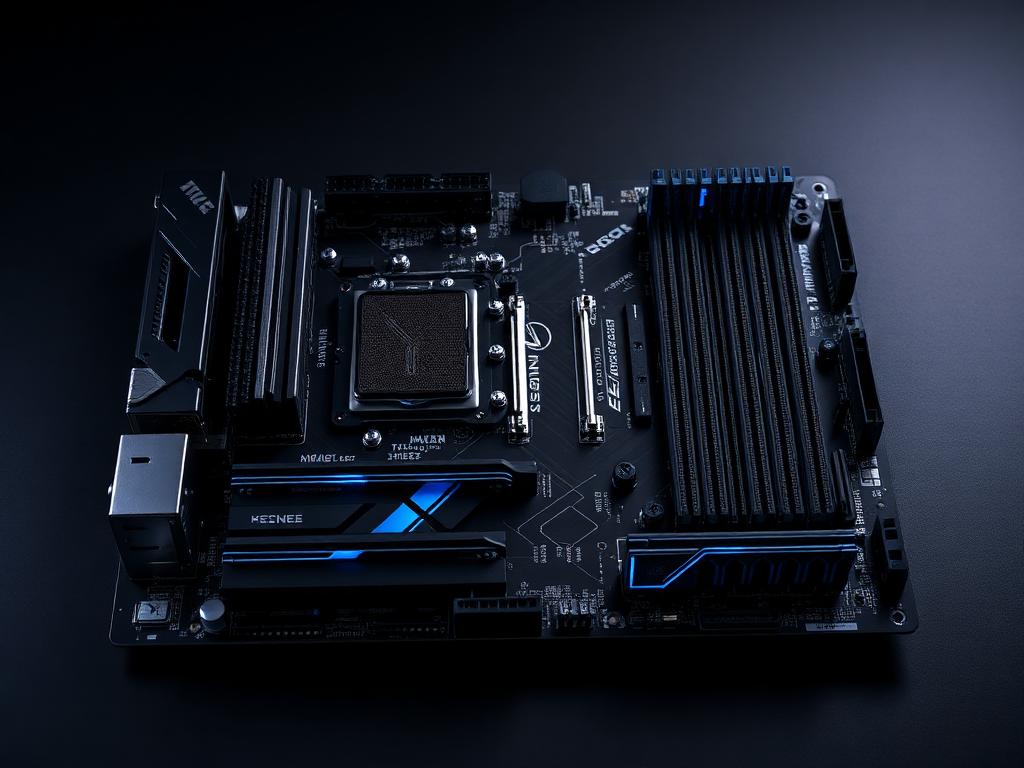
MOTHERBOARD
The platform everything stands on.
Boards decide upgrade paths, VRM stability and connectivity. We verify sockets, power delivery and lane allocation — the invisible specs that matter.
WHAT WE CHECK
- Socket and chipset generation
- VRM phases and heatsinking
- M.2 slot count and PCIe split
- Memory QVL and speed ceiling
- Rear I/O and USB topology
EXAMPLE COMPONENTS
MOTHERBOARD — REFERENCE UNITS
Demo reference entries showing how PPHU ABC reads a component: specs, class, value signal, thermal behavior, upgrade position, concerns.
B650 ATX
CLASS: MAINSTREAM PLATFORM · VALUE: STRONG
159 credits
SOCKET
AM5
MEMORY
DDR5, 4× DIMM
M.2 SLOTS
3
PCIE
1× 4.0 x16
USB-C
Rear + header
FORM FACTOR
ATX
THERMAL NOTE
Adequate VRM heatsinks for 8–12 core CPUs.
UPGRADE POSITION
AM5 supported with new CPUs for years — the safe runway.
CONCERNS
- · No PCIe 5.0 GPU slot at this tier
- · Budget audio codec
X670E ATX
CLASS: ENTHUSIAST PLATFORM · VALUE: FAIR
289 credits
SOCKET
AM5
MEMORY
DDR5, 4× DIMM
M.2 SLOTS
4
PCIE
5.0 x16 + 5.0 M.2
USB
USB4 on select models
FORM FACTOR
ATX / E-ATX
THERMAL NOTE
Overbuilt VRMs — sustains 16-core loads indefinitely.
UPGRADE POSITION
Maximum AM5 expansion for workstations and halo builds.
CONCERNS
- · Costs GPU money — buy only if the lanes are needed
- · Dual-chipset idle power
B760 mATX
CLASS: BUDGET PLATFORM · VALUE: FAIR
129 credits
SOCKET
LGA1700
MEMORY
DDR5, 4× DIMM
M.2 SLOTS
2
PCIE
4.0 x16
FORM FACTOR
Micro-ATX
POWER LIMIT
Stock profiles
THERMAL NOTE
Fine for locked 65W chips; watch VRMs with K-series CPUs.
UPGRADE POSITION
End-of-line socket — what you buy is what you keep.
CONCERNS
- · No CPU overclocking
- · Two M.2 slots fill quickly